A little adventure. A lot of Manitoba.
In the summer of 2015, my wife and I took a three-day motorcycle tour through North Dakota. Its tourism board had a program designed to encourage riders to visit a number of designated destinations, photographing themselves along the way to earn a commemorative patch for completing the challenge.
I liked the idea. It gave riders a reason to explore places they might otherwise pass by, and turned an ordinary ride into something with a purpose.
When I returned home, I checked to see what Manitoba was doing to promote motorcycle tourism. There was nothing of the kind so I asked why and even offered to help develop something to promote Manitoba motorcycle tourism, but was told that it wasn’t financially significant enough to warrant the effort. Sad.
Fair enough. If nobody else was going to build it, I would. And they would come.
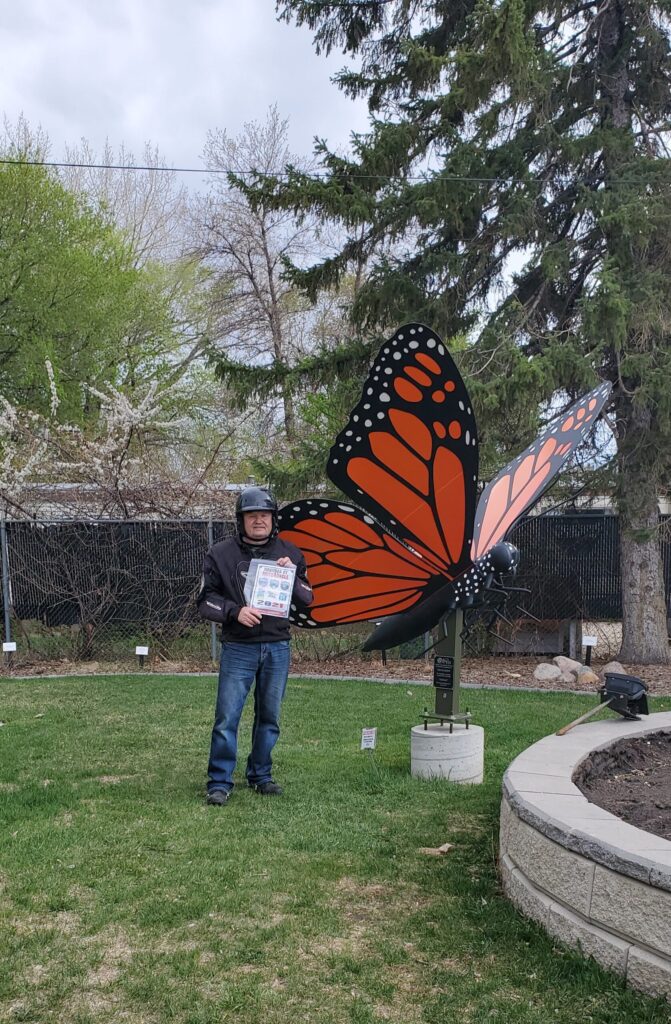
I began planning out what riders could see all across Manitoba, starting with the places I enjoyed discovering myself: unusual roadside art, town statues and destinations that made a ride more interesting. I worked out the rules, the requirements and the restrictions, then designed the branding, built a website, established social media channels and found a local creator to produce the physical patches.
Manitoba by Motorcycle launched in 2017, growing out of a simple idea: give people a reason to get out and discover their own province.
One patch became several
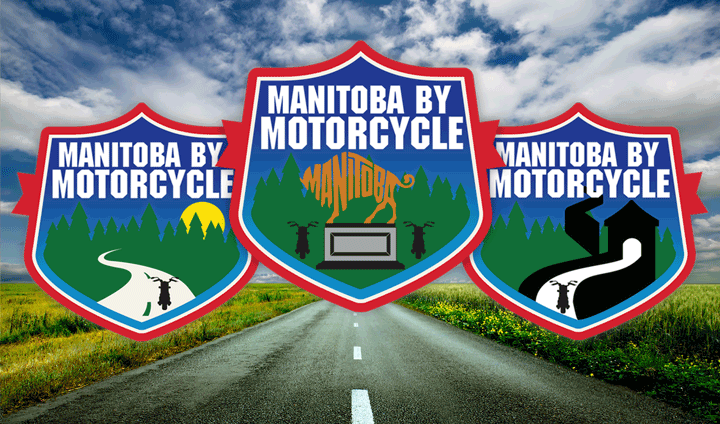
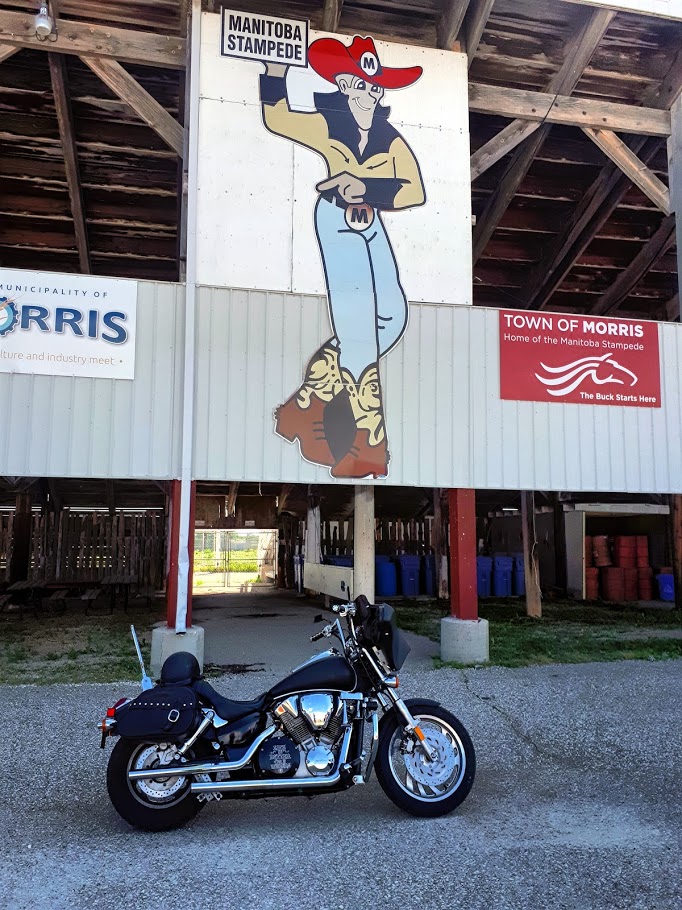
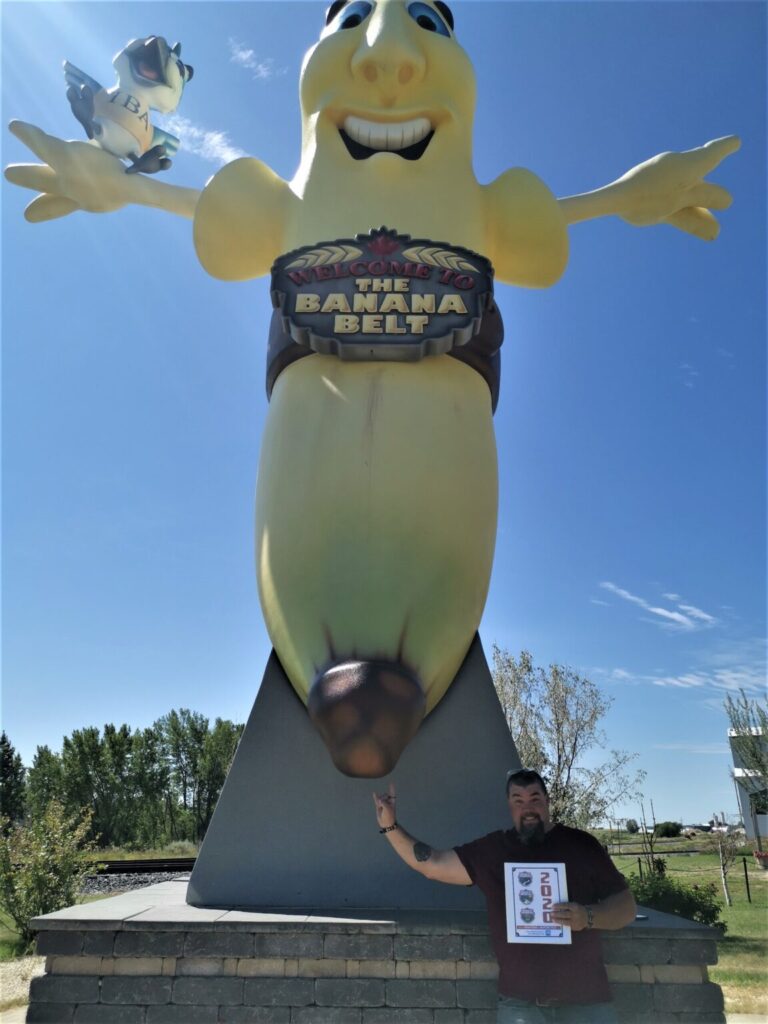
The original program centred on more than 60 town statues and roadside art attractions scattered across Manitoba. Riders could choose any 20 destinations, photograph themselves with their motorcycle and a poster I’d designed for that year’s program, then submit their photos to earn a patch. All 20 visits had to take place within the same calendar year.
The annual poster changed each year, giving the program a recognizable identity while keeping each season distinct. The rules were straightforward, but the freedom to choose destinations meant every rider could create a thier own unique experience.
In 2019, the second full season, I introduced a Provincial Parks patch to showcase some of Manitoba’s 90 provincial parks. Riders needed to photograph themselves at the entrance signs of 12 different parks to qualify.
In 2020, I added a Monuments patch. With support from the Manitoba Historical Society, I assembled a list of more than 40 historical municipal monuments that riders could visit to learn more about Manitoba’s history. Visiting 15 monuments earned another patch.
Each addition gave riders a different reason to explore. The program was no longer just about roadside attractions. It was encouraging people to discover parks, local history and destinations they might never have considered visiting.
The long way around
Promotion started with Facebook and Instagram, including posts in groups where the program was relevant to the audience. I gradually built out the website with regular updates and short articles about destinations, giving riders more information and helping them decide where to go.
I also started an e-newsletter, which eventually grew to about 500 subscribers. I sent out regular emails to subscribers with relevant content and experimented with various writing styles, split testing and formatting to increase readership.
One of the most effective promotional activities was sharing the achievements of participating riders. I’d post about people who completed a challenge, including some of their photographs and those posts regularly attracted plenty of reshares. People enjoyed seeing themselves featured, and they were happy to share their accomplishments with others.
It was a simple form of promotion, but it worked because the participants became part of the story. They weren’t just customers or website visitors. They were the people who were actually getting out and exploring Manitoba.
The program grew steadily. Every year brought more submissions. In one particularly busy year, I’d received around 1,000 photographs by mid-season. It took me days to review them and verify submissions.
Some riders took it even further, making it their goal to visit every single destination in the program within one year. That was a substantial undertaking, involving far more than a few casual weekend rides. True dedication.
There were also riders who earned the same patches year after year, choosing new destinations each season. They kept coming back, and the program gave them a continuing reason to explore.
Those were the kinds of outcomes that made the work worthwhile. I’d created something people wanted to participate in, and they were turning it into their own adventures.

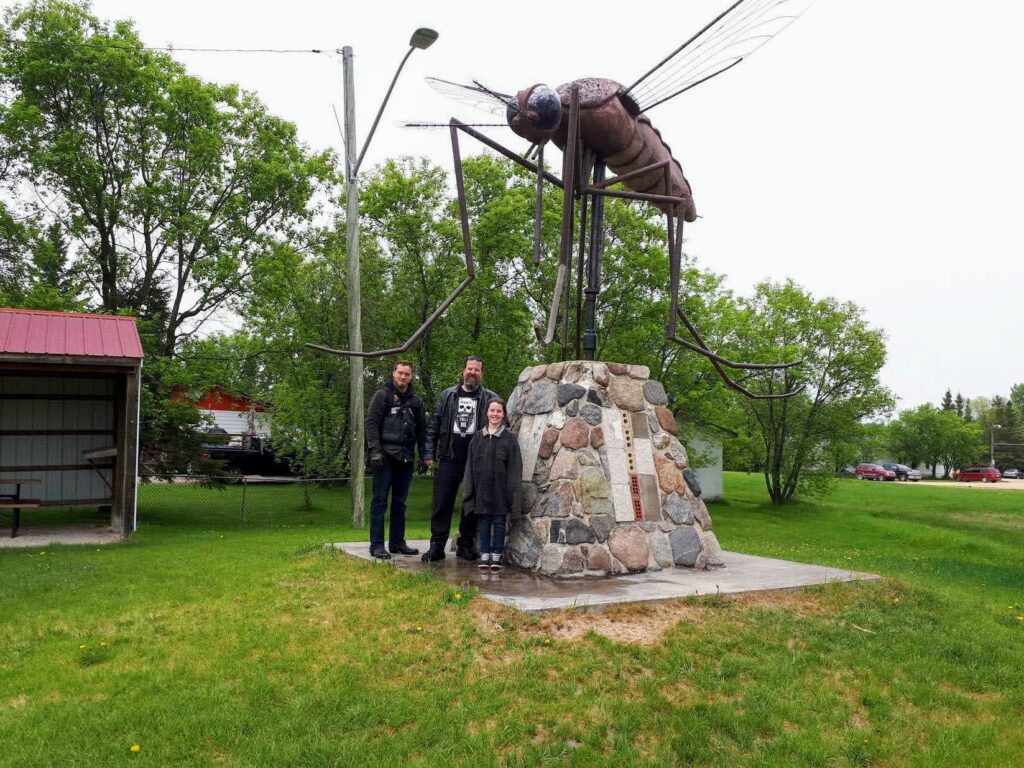
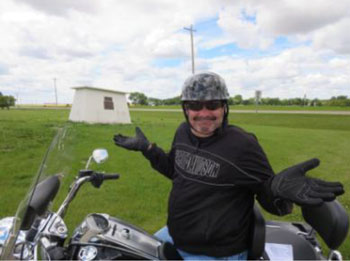
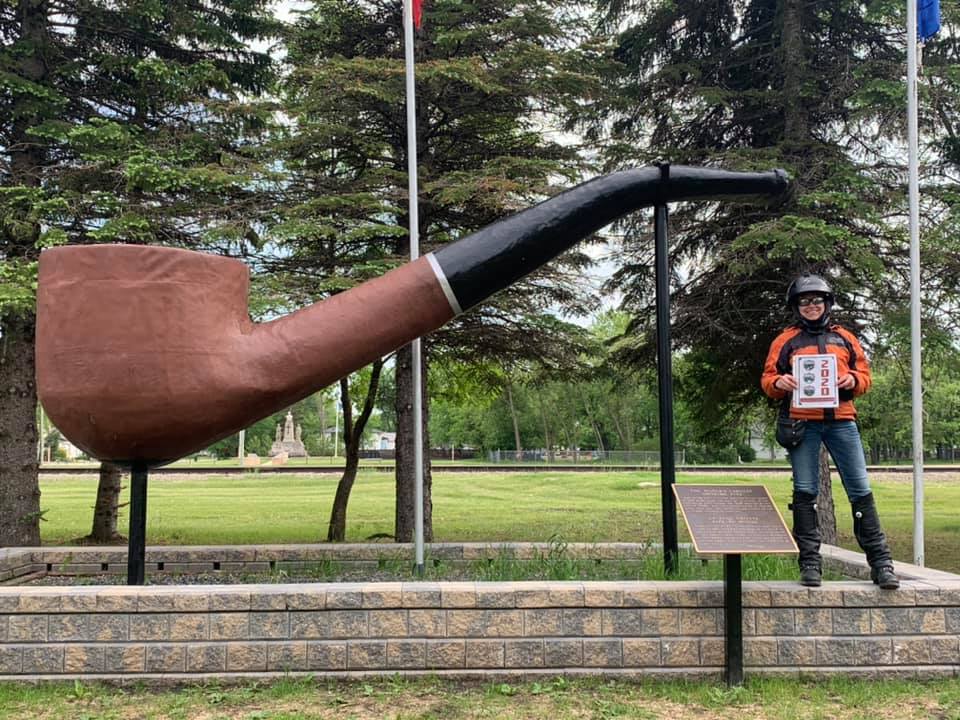
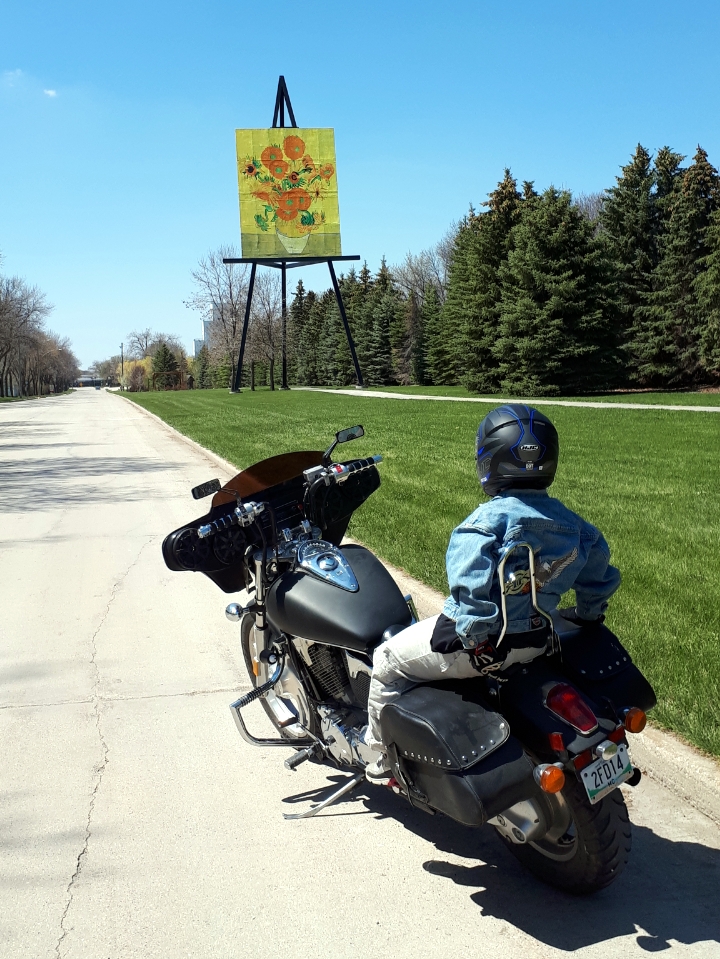
From roadside art to regional tourism
The program’s growth eventually attracted attention beyond the riding community.
The director of Eastman Tourism began commenting on social media about the destinations I was promoting in her region and suggested additional places to include. Central Manitoba Tourism saw what was happening and reached out to discuss a partnership.
The four regional tourism organizations—Central Manitoba Tourism, Interlake Tourism, Eastman Tourism and Westman Tourism—were connected through Travel Manitoba and already worked together. As discussions progressed, Central Manitoba Tourism helped connect me with the directors of all four organizations. From there, I developed partnerships with each of them.
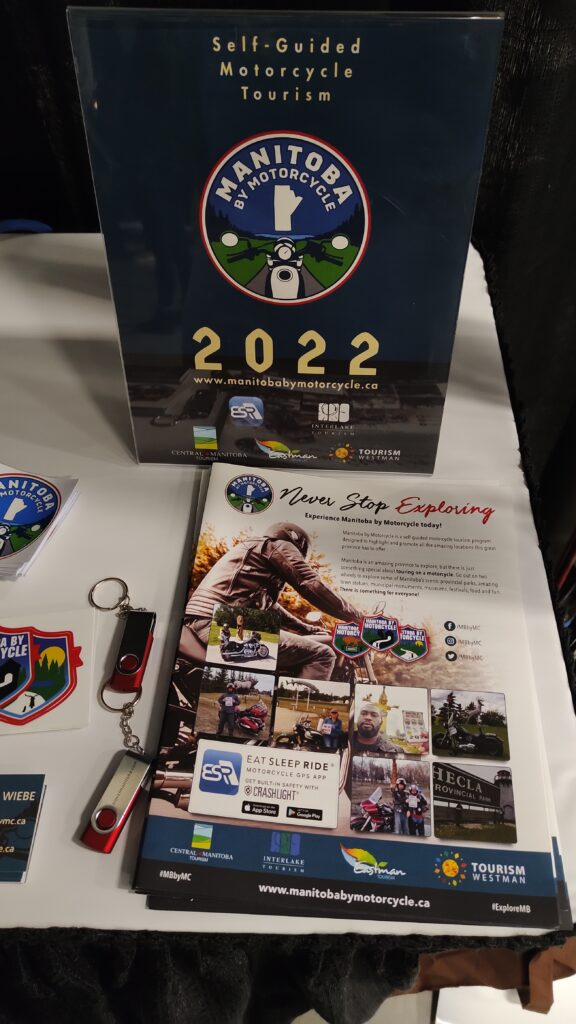
In 2022, those relationships led to a major expansion: a patch for each of the four regions. The tourism boards helped determine the destinations, which included museums, businesses and other significant attractions. Depending on the regional challenge, riders needed to visit 12 to 15 destinations to earn the corresponding patch.
The tourism boards also promoted the program through full-page advertisements in their annual travel guides, on thier websites and social media. Local newspapers published stories about it, and in the final couple of years I was invited to promote the program at several events.
What had started as an independent project built around roadside art had become a collaborative tourism initiative spanning the province.
I hadn’t set out to build partnerships with four regional tourism organizations. I’d set out to give riders something interesting to do. The partnerships developed because the program was already doing something those organizations wanted to support.
A digital detour
I also partnered with Eat Sleep Ride, a motorcycle riding app, to create a digital version of the program. Instead of photographing themselves at each destination, riders could use the app to track their rides. GPS technology automatically recorded when they visited the designated locations.
It was a logical extension of the program, offering an alternative to collecting and submitting photographs. In practice, however, participation was limited. Most riders seemed to prefer the simpler, less technology-dependent approach of taking photographs.
It was a useful reminder that adding technology doesn’t automatically improve an experience. Sometimes the original method is already the one people prefer.
More than a place to ride
One of my favourite parts of running Manitoba by Motorcycle was exploring the destinations myself and writing about places worth visiting.
I chose the destinations and businesses I mentioned based on my own interests and experiences. If I was travelling to a town, I’d look for somewhere interesting to stop, perhaps a local restaurant or another small business that added something to the visit.
I wasn’t selling businesses advertising or featuring them as paid promotions. I was sharing personal recommendations: places I would visit myself and reasons I thought other riders might enjoy them.
That approach reflected a broader interest of mine. I’ve always enjoyed talking to small-business owners, learning how they got started and understanding what makes their businesses tick. There’s a story behind most businesses, and often a person who took a chance, solved a problem or built something from very little. I love those stories.
Manitoba by Motorcycle gave me another way to support those businesses by encouraging people to visit the communities where they operated. There was some feedback from businesses on social media about seeing riders stopping to take photographs. It wasn’t widespread enough to justify grand claims about economic impact, but it was encouraging to hear that the program was translating into real visits.
The regional partnerships took that idea further, bringing museums, businesses and other attractions into the destination lists. The program wasn’t just encouraging people to ride. It was giving them reasons to stop, look around and experience more of Manitoba.
The business behind the patches
The patches were free for riders to earn, although they could purchase extras if they wanted them. Keeping participation accessible was important, but it also meant the program needed a way to pay its bills.
Initially, online advertising on the website provided revenue to help cover the costs. The patches were relatively inexpensive to produce, making the model workable while the program was smaller.
That changed when the original patch supplier shut down and relocated. I had to find another provider, and the replacement’s prices were roughly four times higher.
The regional tourism partnerships helped. Each tourism board covered the production costs for its own regional patch, meaning I only had to fund the original three programs myself. But the underlying financial challenge remained.
I explored several options to make the initiative more sustainable. One was to replace online advertising with paid listings in a business directory. I was encouraged to pursue the idea, with others offering to sell the listings in exchange for a percentage of the revenue. I agreed. They sold five or six listings, then disappeared.
It was a disappointing outcome, and the directory never became the revenue stream I’d hoped it might be. More importantly, it reinforced a practical lesson: a promising idea isn’t the same as a workable business model. Revenue arrangements depend on execution, reliable partners and a clear understanding of who is responsible for delivering what.
I kept looking for alternatives, but none seemed like the right fit. Participation was growing, yet the economics of keeping the program running were becoming increasingly difficult to justify.
When the ride becomes work
The financial challenge wasn’t the only consideration.
Running the program required a substantial amount of time. I rode around Manitoba to explore because I genuinely enjoyed it. Discovering a new destination, finding an interesting place to stop and seeing more of my own province were rewards in themselves.
Over time, though, the purpose of those rides began to change. Instead of simply exploring, I increasingly found myself thinking about how to turn each destination into content for the program. Every trip became another opportunity to photograph, document, write and promote.
The activity I had started because I loved it was becoming less enjoyable.
At the same time, I had experienced some difficult personal circumstances in the preceding year and throughout 2023. I needed to step back, give myself some breathing room and focus more attention on my personal life.
By then, I had explored several ways to make the program financially sustainable without finding an option that made sense. Continuing would have meant committing more time and energy to a project that was no longer working for me in the same way.
I closed Manitoba by Motorcycle in 2023.
It wasn’t a decision driven by declining participation. Riders were still engaging with the program, completing challenges and discovering destinations. The problem was that participation alone couldn’t make the operation sustainable.
Sometimes a project can succeed at what it was designed to do and still reach a point where continuing no longer makes sense.
The destination was the point
Looking back, I’m proud of what Manitoba by Motorcycle became.
I started with an idea inspired by a trip to North Dakota and built it into a province-wide program with multiple challenges, thousands of potential destination visits, regional tourism partnerships and a community of riders who returned year after year.
I designed the brand, built the website, developed the program rules, created the content, managed the promotion, coordinated the partnerships and worked through the practical challenges of keeping it operating. I learned a great deal about tourism marketing, audience engagement, partnership development and the realities of sustaining a community-focused initiative.
But the achievement I value most isn’t the number of destinations or the patches themselves.
It’s that I created something other people could enjoy. Something that allowed them to experience what I’d experienced while exploring my own backyard.
The program gave people a reason to take the longer route, visit a town they might otherwise have passed by, discover a piece of local history or find a new favourite place to stop. It encouraged people to look at their own province with fresh eyes.
I didn’t need to own the destination or be there when someone discovered it. I just wanted to give them a reason to go.
Manitoba by Motorcycle is no longer operating, but I’m glad I built it. Not every worthwhile venture needs to last forever. Sometimes the value is in what you create, the people it reaches and the experience you gain along the way.