
Two wheels, one big learning curve.
The idea was simple. Or, at least, we thought it was.
In 2012, I cofounded River City Rides Inc., a motorcycle rental company in Manitoba. The idea grew out of a personal interest in riding, but there was a practical business opportunity behind it, too.
Owning a motorcycle in Manitoba can be expensive. Very. Between the purchase price, insurance, maintenance and the relatively short riding season, ownership doesn’t always make sense for everyone. If you only want to ride a handful of times each summer, renting can be a much more practical option. An extremely common experience all over the world.
We set out to serve that market with what we believed was Manitoba’s first dedicated motorcycle rental company. We’d heard rumours of a rental operation dating back to the 1960s or 1970s, but we were never able to verify its existence. As far as we could tell, there was no established motorcycle rental business serving the market when we launched.
What began with a straightforward idea grew into a substantially broader operation combining motorcycle rentals, retail sales, winter storage and limited service work.
Getting the business off the ground involved more than finding motorcycles and customers. Property owners were not keen on the “optics” of a motorcycle business in a visible retail space, making the location journey extensive. Manitoba Public Insurance (MPI) had no established motorcycle rental insurance options on record, so we had to work with them to arrange coverage for our rental fleet.
That wasn’t the end of it though. We also worked with MPI to establish motorcycle loss-of-use coverage as an optional benefit for Manitoba riders. Previously available for cars and trucks, loss-of-use coverage could now be extended to motorcycles, allowing riders to rent a replacement motorcycle (or car) if their own bike was involved in an insurance claim.
It was an important piece of the puzzle. We needed a way to insure the business, but there was also an opportunity to address a gap that affected Manitoba motorcycle owners more broadly.
It was my first experience running a retail operation and managing it from the ground up.. There was a lot to learn, and plenty of road ahead.
Born to be wild. Stocked to the rafters.
Rentals were the original core of the business, with options ranging from hourly bookings to weekly rentals. Our primary customers were local riders who didn’t own motorcycles but wanted the freedom to ride when the opportunity arose.
Tourists were another important market. We received rental bookings from as far away as Germany, demonstrating that there was interest beyond the local riding community.
But we weren’t just handing over keys.
We operated a retail store carrying motorcycle clothing, riding gear, parts and accessories. We offered winter storage for customers’ motorcycles and completed limited service work onsite, including oil changes, tire changes and light maintenance. When you spend 90 per cent of your day at a computer, turning a wrench can be extremely beneficial. Plus test riding many motorcycles is a wildly fun perk.
Each service brought its own operational requirements. Rentals meant managing availability and customer expectations. Retail meant inventory, merchandising and supplier relationships. Storage and service added further responsibilities.
The business had several moving parts, and they all had to work together.
You meet the nicest people on a motorcycle
One of the most rewarding parts of the experience was the motorcycle community itself.
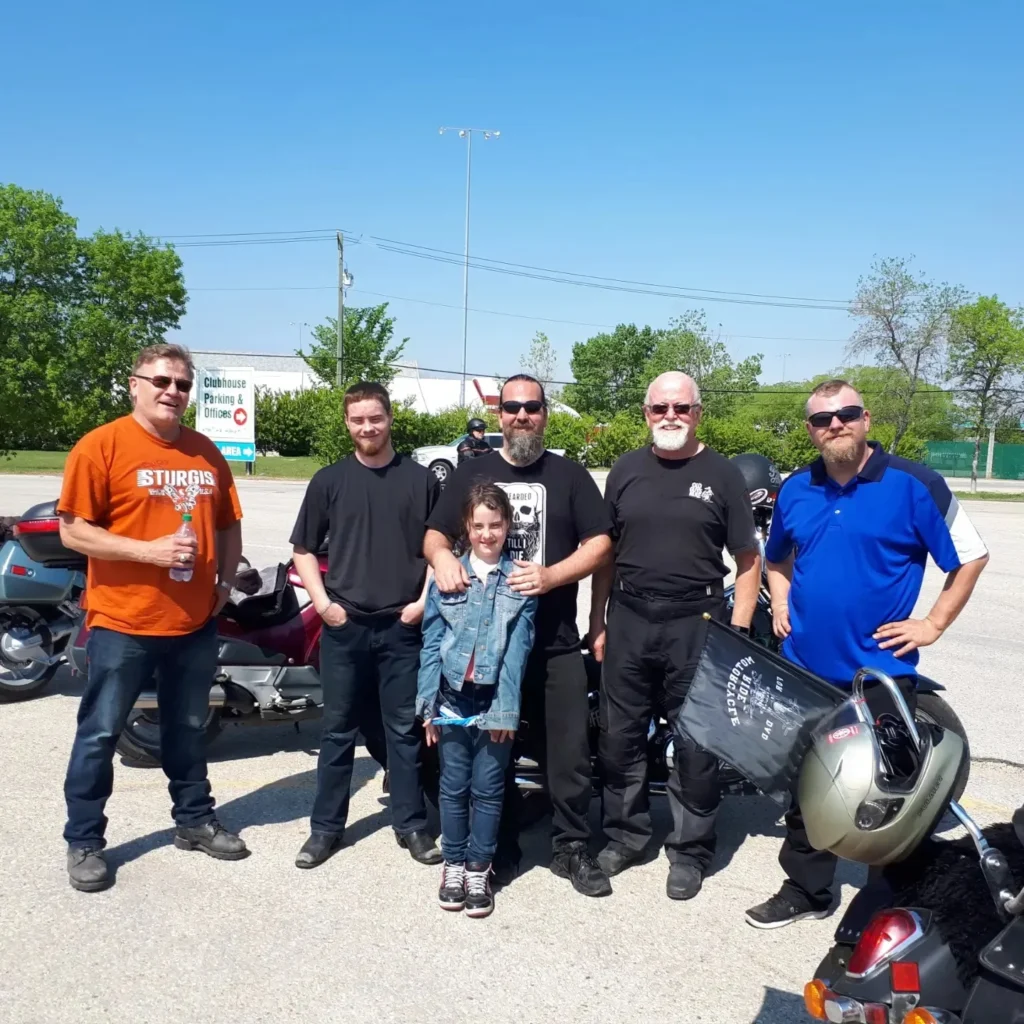
Community support was good, and there were plenty of events where we could promote the business, meet riders and build relationships. Being involved in that community meant more than putting up a sign and hoping customers walked through the door. We had to show up, participate and give people a reason to remember us.
Some customer relationships grew into long-term friendships. Those connections became part of the experience I remember most fondly.
The events also taught me a great deal about marketing in practice. We worked across social media, our website, print advertising, in-store merchandising, branding and face-to-face promotion. Each channel played a different role, and each required us to think about how people discovered the business and what would persuade them to engage with it.
Marketing wasn’t a single activity. It was a collection of connected decisions, repeated over time.
It takes two to make a thing go right
Running River City Rides alongside my full-time career meant sharing responsibility with my cofounder. We brought different strengths to the business.
My partner excelled at retail sales and customer service, while I tended to approach things through organization, planning and business operations. In principle, those differences could complement each other. In practice, making that work required communication, visibility and a shared understanding of what was happening across the business.
My full-time job meant I wasn’t the in-store every day guy. I generally came in on weekends, and there were times when I had limited visibility into the day-to-day operation. I relied on my partner to manage much of the daily activity, while I worked to contribute in the areas where I could. Marketing and mechanical maintenance were where I hung my hat not.
Over time, that arrangement became difficult. We didn’t always have the communication or shared understanding needed to manage the business as effectively as I believed we could.
I eventually recognized that I wasn’t in a position to contribute the way I felt the business required without making a significantly arger commitment of my own time. That was one the biggest factor behind my decision to leave in 2017.
It wasn’t a simple question of one person being right and the other wrong. We had different strengths, different working styles and different approaches to running the operation. The experience taught me that complementary skills are valuable, but they don’t replace clear communication, documented decisions and shared visibility into the business.
A partnership needs more than people who are good at different things. It needs a way of working together to achieve business goals and leave smiling.
The business behind the bikes
River City Rides gave me practical experience in areas that had been outside my previous day-to-day work.
I learned about retail sales, inventory management, vendor relationships and developing relationships with suppliers. I gained experience with merchandising and the challenges of managing products alongside a service-based business.
I also learned how to build marketing activity around a physical location and a specific audience. Social media, website content, print advertising, branding and in-person events all had a place, but they needed to work together rather than operate as disconnected activities.
Working with MPI also taught me that developing a business sometimes means helping build the infrastructure around it. We weren’t simply bringing an existing model to a new market. We had to work with an established institution to address insurance needs that hadn’t previously been accommodated for motorcycle rentals. That experience reinforced the importance of identifying barriers, working with stakeholders and finding practical ways to move things forward.
Collaboration was another important lesson. We worked with other businesses on province-wide events and developed mutually beneficial referral relationships, including with local competitors. Woking together to help the community so everyone benefits.
That last point might seem counterintuitive. Competitors don’t always have to be adversaries. In a niche market, businesses can sometimes help one another reach customers, serve different needs and build awareness of an industry that is still developing.
The experience broadened my understanding of how businesses operate beyond the creative and administrative responsibilities I’d already gained through freelancing. I was dealing with physical products, customer-facing operations, suppliers, inventory, events and the daily realities of retail.
Different environment. Different challenges. Same need to understand how all the pieces fit together.
The long way around
Manitoba presented some structural challenges for a motorcycle rental business. The riding season was short, insurance costs were high, and motorcycle tourism had limited institutional support.
Those factors made the business difficult to sustain, but they weren’t the only considerations. How the operation was managed, how the partners communicated and how responsibilities were shared mattered just as much.
I left River City Rides in 2017. The business continued without me and ultimately closed in 2019.
I often reflect on what might have happened if I’d left my full-time career and committed myself to the business instead. Perhaps I could have addressed some of the operational issues I saw. But that remains hypothetical, not something I can claim would have changed the outcome.
What I can say is that the experience gave me a much clearer understanding of the demands of business ownership, particularly when a business combines retail, rentals, service and customer relationships all under one roof.
A good idea can open the door but sustaining it takes so much more.
What I brought home
River City Rides was an important part of my development as a business operator. It pushed me beyond the disciplines I already knew and into the practical demands of retail, vendor management, customer service, marketing and collaborative business development.
It also changed how I think about partnerships. Clear communication, documented responsibilities and visibility into day-to-day operations aren’t administrative extras. They’re part of the infrastructure that allows businesses to succeed.
I came away with valuable relationships, new skills and a much better understanding of both the opportunities and the risks involved in operating a niche business.
The company didn’t have the ending we’d hoped for. But the experience was still worthwhile.
Sometimes you learn by building something that lasts. Sometimes you learn by building something that doesn’t. Either way, you have to be willing to get on the bike go for a ride.
Life is Better on 2 Wheels!